The Art of Speculation (Philip L. Carret)
Trader's Library #10 · Speculation classics and biographies. A calm, matter-of-fact classic: speculation as a craft, not a lottery.
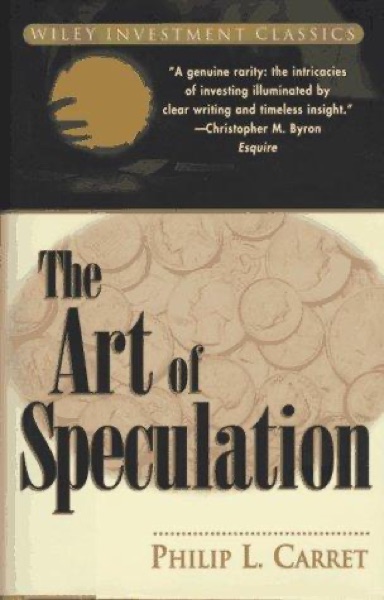
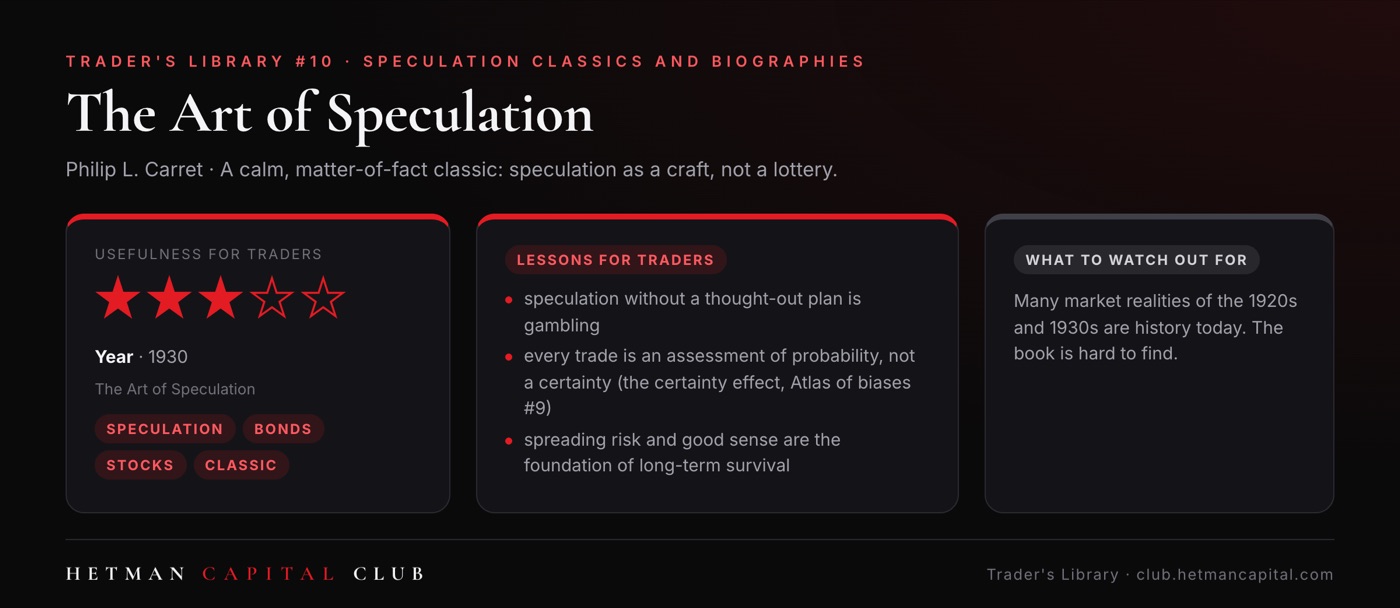
Author: Philip L. Carret · Original: The Art of Speculation · Year: 1930 · Usefulness for traders: ★★★☆☆
What it's about
A classic 1930 handbook of speculation that grew out of articles for Barron's weekly. Carret, founder of one of the first US mutual funds (the Pioneer Fund), explains what speculation is, how stock, bond and commodity markets work and how to assess risk.
What it gives a trader
Carret treats speculation not as gambling but as a profession that requires knowledge and good sense. An important idea for traders: speculation means anticipating price changes based on analysis and consciously taking risk, not counting on luck.
Lessons for traders
- speculation without a thought-out plan is gambling
- every trade is an assessment of probability, not a certainty (the certainty effect, Atlas of biases #9)
- spreading risk and good sense are the foundation of long-term survival
What to watch out for
Many market realities of the 1920s and 1930s are history today. The book is hard to find.
Discussion
The discussion takes place in Hetman Capital Club (in Polish). Join the discussion in the Club →
Navigation
← #009 Confusion of Confusions (Joseph de la Vega) · Library index · #011 Soros: Other Books and Biographies →
Educational content, not investment advice. The book description is my own summary and assessment, not quotations. Edition details were checked in catalogues and bookshops, and where there was doubt I said so plainly.