The macro calendar: the data that moves the Dow and how to prepare for it
Some of the biggest intraday moves come with macroeconomic data releases and central bank decisions. Within seconds, volatility can multiply and spreads widen. Knowing the calendar is part of managing your risk and your own state.
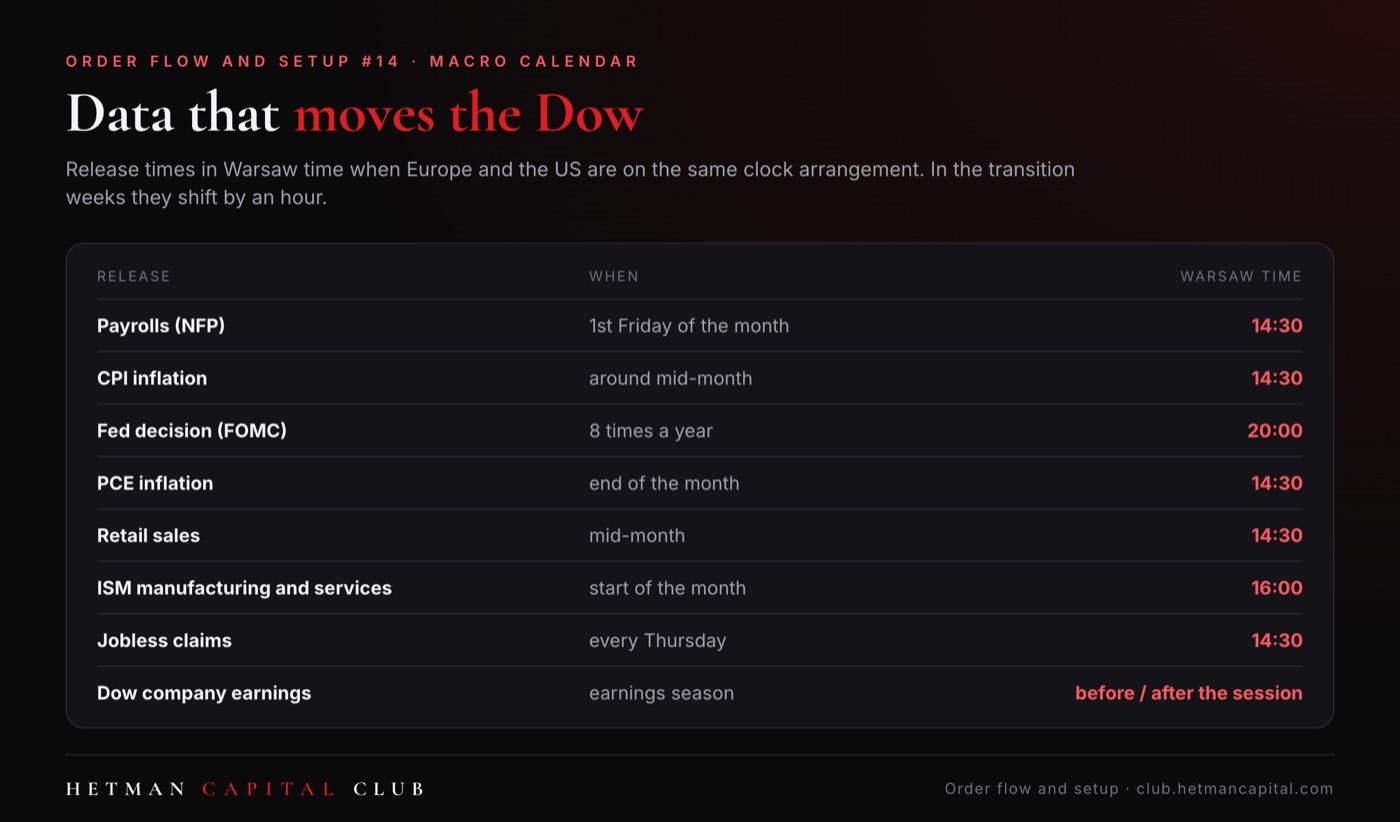
The key releases
Times in New York time (Warsaw time in brackets, in the standard 6-hour arrangement):
- Payrolls (NFP), the jobs report: usually the first Friday of the month, 8:30 AM (14:30)
- CPI inflation: around the middle of the month, 8:30 AM (14:30)
- Fed decision (FOMC): 8 meetings a year, statement at 2:00 PM (20:00), the Chair's press conference at 2:30 PM (20:30)
- PCE inflation: end of the month, 8:30 AM (14:30)
- Retail sales: middle of the month, 8:30 AM (14:30)
- ISM manufacturing and services: start of the month, 10:00 AM (16:00), i.e. already during the regular session
- Initial jobless claims: every Thursday, 8:30 AM (14:30)
- Quarterly earnings of Dow companies: during earnings season, before the open or after the close
Why it matters for an MYM trader
- Volatility: at the moment of release, price can jump through many levels within seconds.
- Liquidity: just before the release, some orders disappear from the book and spreads widen.
- The trader's state: releases are stimuli that raise arousal (the 🧘 Trader's Body and Mind space, Fundamentals #1). It's worth having your plan for that moment set in advance.
How to prepare
- Check the calendar before every session, with times in your own time zone.
- Decide in advance how your plan treats the moment of release. Many traders have a process rule for the time just before and just after important data. Set your own, ideally with a mentor.
- Remember the clock changes (article #13).
- Watch the reaction, not just the number. The market reacts to the gap between the release and expectations, and the first reaction is often quickly corrected.
How I do it
My analytical system pulls in the macro calendar, flags high-impact releases in the coming hours and matches news with the market's reaction (article #5). The day's calendar is a permanent part of the Session Plan in the Club.
Exercise
At the start of each week, write down the key releases with their times in your journal. After the week, note how the market behaved at each of them and how you felt at the time.
Educational content, not investment advice. No signals, entries or position sizes.