Outcome bias
Atlas of Cognitive Biases #28 · Information and beliefs. A good decision can produce a loss
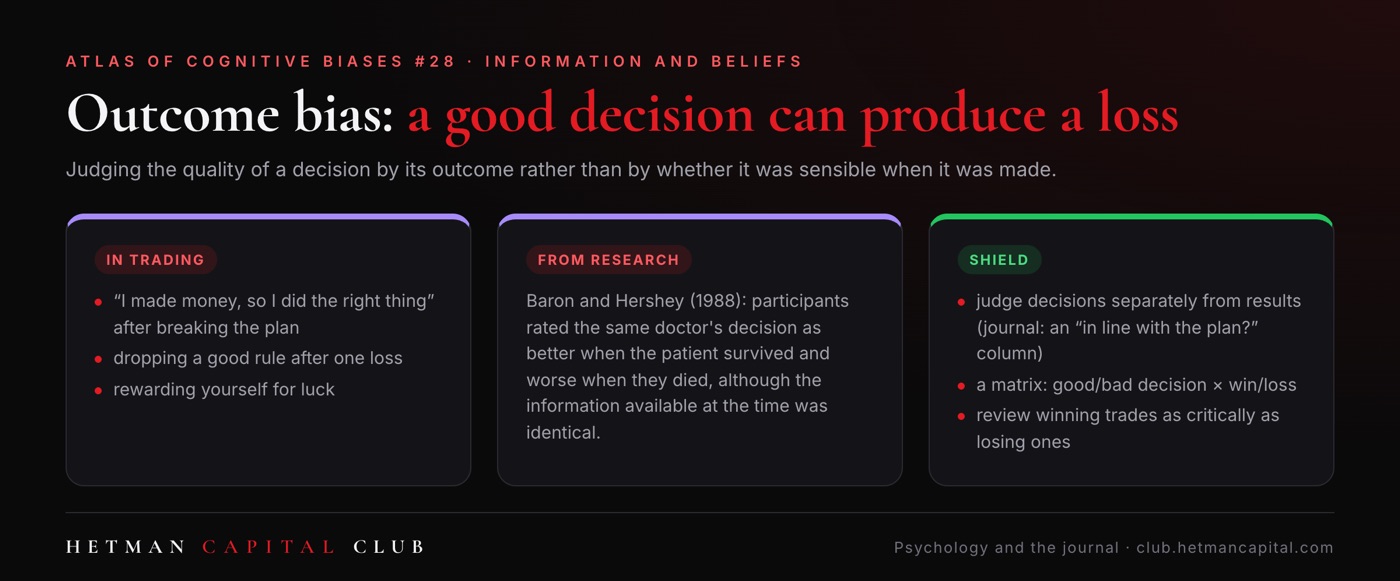
What it looks like in trading
- “I made money, so I did the right thing” after breaking the plan
- dropping a good rule after one loss
- rewarding yourself for luck
An example from a session
A trader broke their risk limit and made money. The brain remembers: “breaking the rules works”. The next breach ends in a big loss. The first decision was bad, even though it produced a profit.
What the research says
Baron and Hershey (1988): participants rated the same medical decision as better when the patient survived and worse when the patient died, even though the information available at the time was identical. Annie Duke (2018), a professional poker player, calls this bias “resulting”.
The shield: how to defend yourself
- judge decisions separately from results (journal: an “in line with the plan?” column)
- a matrix: good/bad decision × win/loss
- review winning trades as critically as losing ones
Exercise
For a week, tag every situation in your journal where you notice this bias in yourself with #28, even when it didn't affect your decision. After the week, count them and write down the conditions in which it appeared most often.
Educational content, not psychological advice or an investment recommendation. You make every decision yourself, in line with your own plan.
Related biases
- Hindsight bias (#27)
- Self-serving bias (#14)
- Ignoring regression to the mean (#8)
Frequently asked questions
What is outcome bias?
Judging the quality of a decision by its outcome rather than by whether it was reasonable when it was made. Also known as “resulting”.
How does outcome bias show up in trading?
Typical signs: “I made money, so I did the right thing” after breaking the plan; dropping a good rule after one loss; rewarding yourself for luck.
How do I defend myself against this bias?
Judge decisions separately from results; a matrix: good/bad decision × win/loss; review winning trades as critically as losing ones.
Educational content, not psychological advice or an investment recommendation.