Caffeine, water and food during the session
Fundamentals #5. The brain uses about 20% of the body's energy and is sensitive to swings in glucose, hydration and stimulants. A long evening session encourages chaotic eating and one coffee after another. A few simple rules give you steady energy all the way to the close.
Caffeine: a tool, not fuel
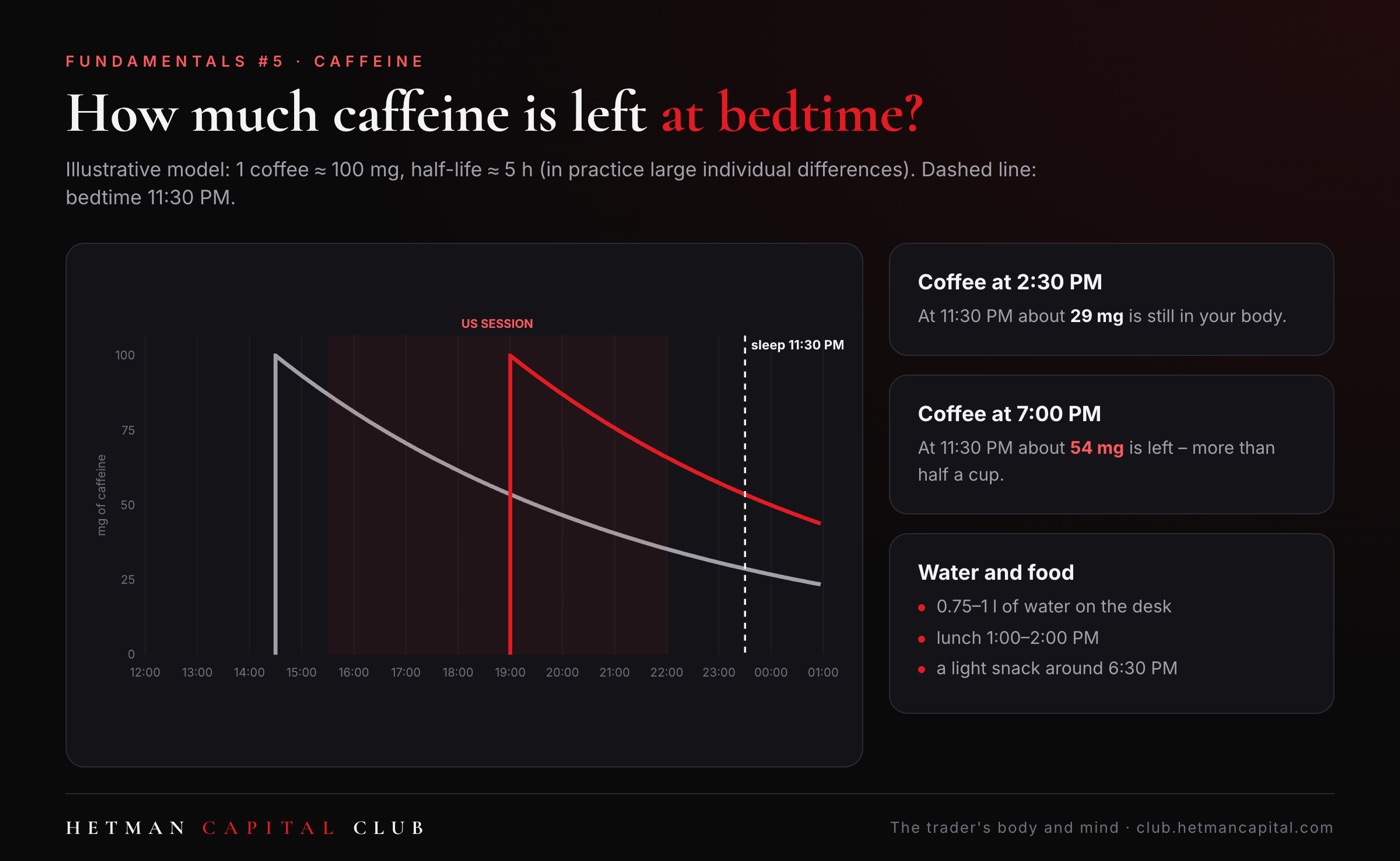
- It works for hours. Its half-life averages about 5 hours, with large individual differences. A coffee at 6 PM still leaves half the dose in your body at 11 PM.
- Too much increases anxiety. High doses increase jitters, palpitations and restlessness – symptoms that are easy to mistake for “market instinct”.
- A safe limit. The European Food Safety Authority (EFSA) considers up to 400 mg a day (about 3–4 cups of coffee) safe for healthy adults, with single doses of up to 200 mg.
In practice: the first coffee 60–90 minutes after waking, the last one no later than just before the open (around 9:00 AM New York time, 15:00 in Warsaw). During the session: water, herbal tea or decaf.
Hydration
Studies by Ganio et al. (2011) and Armstrong et al. (2012) showed that even mild dehydration, around 1–1.5% of body weight, worsens mood and concentration and increases the feeling of fatigue. At a desk it's easy to drink nothing for hours.
- a bottle of water (0.75–1 l) on your desk for every session
- a glass of water at every micro-break
- urine colour as a simple indicator: pale straw means you are well hydrated
Food: steady glucose, steady attention
A big meal full of fast carbohydrates before the open often ends in an energy crash during the first hour of the session. The goal is stability.
A sample plan for a trading day (Warsaw time; the New York open is at 15:30):
- Breakfast: protein + fat + complex carbohydrates (eggs, wholegrain bread, vegetables).
- Lunch around 13:00–14:00: the main meal of the day, with plenty of protein and vegetables, 1.5–2 hours before the open so digestion doesn't compete with concentration.
- During the session around 18:00–19:00: a light snack in the quiet part of the session: nuts, plain yoghurt, fruit, a sandwich with some protein.
- Dinner after 22:00: light and not too large, so it doesn't make it harder to fall asleep.
What to avoid during the session
- sweets and sugary drinks “for energy”
- energy drinks (a big dose of caffeine and sugar at once)
- eating at the chart: eat during a break, away from the platform
- alcohol during the session or as a reward after it
This week's protocol
For 5 trading days: last coffee before the pre-market session starts, a bottle of water on the desk and one planned snack in the quiet part of the session. Rate your energy (1–10) at two fixed times in the second half of the session. Compare with the previous week.
Common questions
I can't last until the close without coffee. What should I do? That is usually a sign of sleep debt, not a lack of caffeine. As a transition: a smaller dose earlier, a short nap before the session, movement and bright light during the session.
Is decaf worth it? Yes, as a ritual and a drink during the session. It contains trace amounts of caffeine, usually irrelevant for sleep.
What about focus supplements? Most have weak evidence. Before reaching for supplements, sort out your sleep, hydration and meals. Check any supplement with your doctor.
Sources
- Armstrong L. E. et al. (2012). Mild dehydration affects mood in healthy young women. Journal of Nutrition.
- EFSA Panel on Dietetic Products (2015). Scientific Opinion on the safety of caffeine. EFSA Journal.
- Ganio M. S. et al. (2011). Mild dehydration impairs cognitive performance and mood of men. British Journal of Nutrition.
Educational content, not medical or dietary advice, and not an investment recommendation. If you have a chronic illness or diabetes, or are pregnant, agree your eating plan with a doctor or dietitian.