0️⃣ The break-even effect
Atlas of Cognitive Biases #38 · Gains, losses and risk. Chasing break-even costs the most
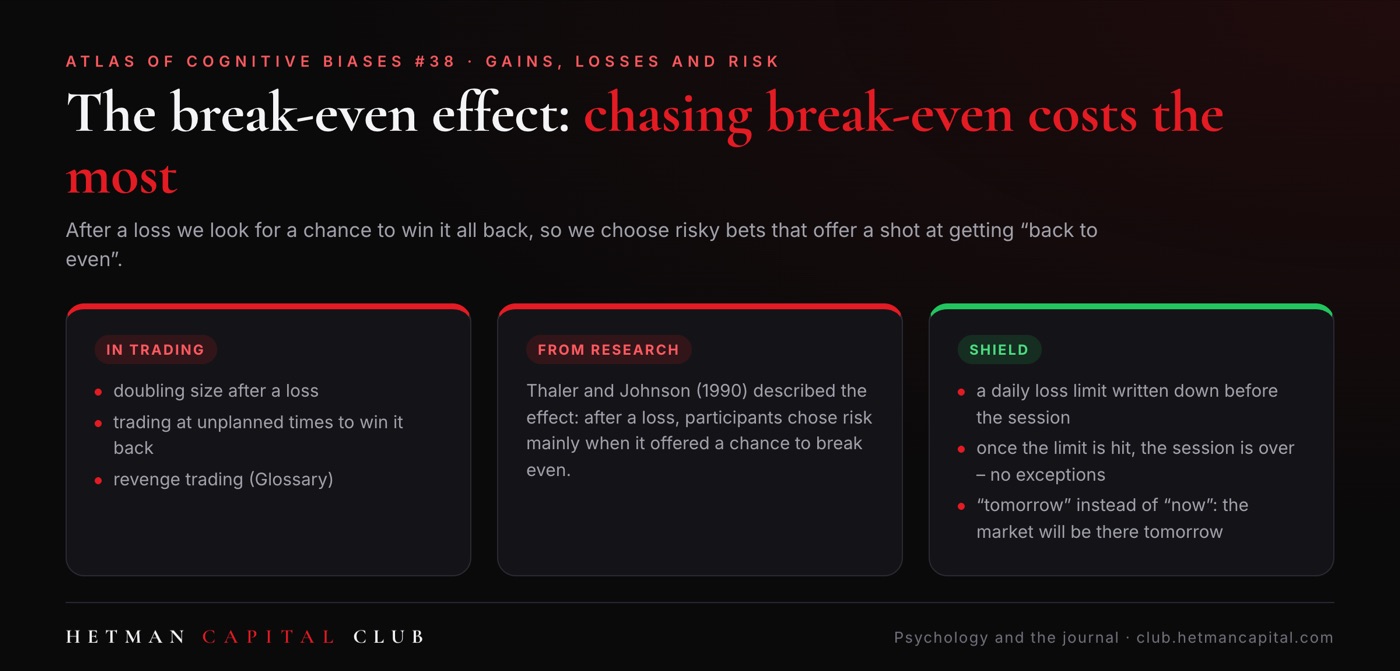
What it looks like in trading
- doubling size after a loss
- trading at unplanned times to win it back
- revenge trading (Glossary)
An example from a session
−2R in the morning. The afternoon is a series of hasty entries “to win it back”. The day's result: −5R. The most expensive losses are often the ones that tried to recover earlier ones.
What the research says
Thaler and Johnson (1990) described the effect: after a loss, participants chose risk mainly when it offered a chance to break even. Coval and Shumway (2005) showed that professional bond futures traders in Chicago took on more risk in the afternoon after morning losses.
The shield: how to defend yourself
- a daily loss limit written down before the session
- once the limit is hit, the session is over – no exceptions
- “tomorrow” instead of “now”: the market will be there tomorrow
Exercise
For a week, tag every situation in your journal where you notice this bias in yourself with #38, even when it didn't affect your decision. After the week, count them and write down the conditions in which it appeared most often.
Educational content, not psychological advice or an investment recommendation. You make every decision yourself, in line with your own plan.
Related biases
- The reflection effect (#35)
- Loss aversion (#34)
- The house money effect (#37)
Frequently asked questions
What is 0️⃣ The break-even effect?
After a loss we look for a chance to win it all back, so we choose risky bets that offer a chance to “get back to zero”.
How does 0️⃣ The break-even effect show up in trading?
Typical signs: doubling size after a loss; trading at unplanned times to win it back; revenge trading (Glossary).
How do I defend myself against this bias?
A daily loss limit written down before the session; once the limit is hit, the session is over – no exceptions; “tomorrow” instead of “now”: the market will be there tomorrow.
Educational content, not psychological advice or an investment recommendation.